What the line includes
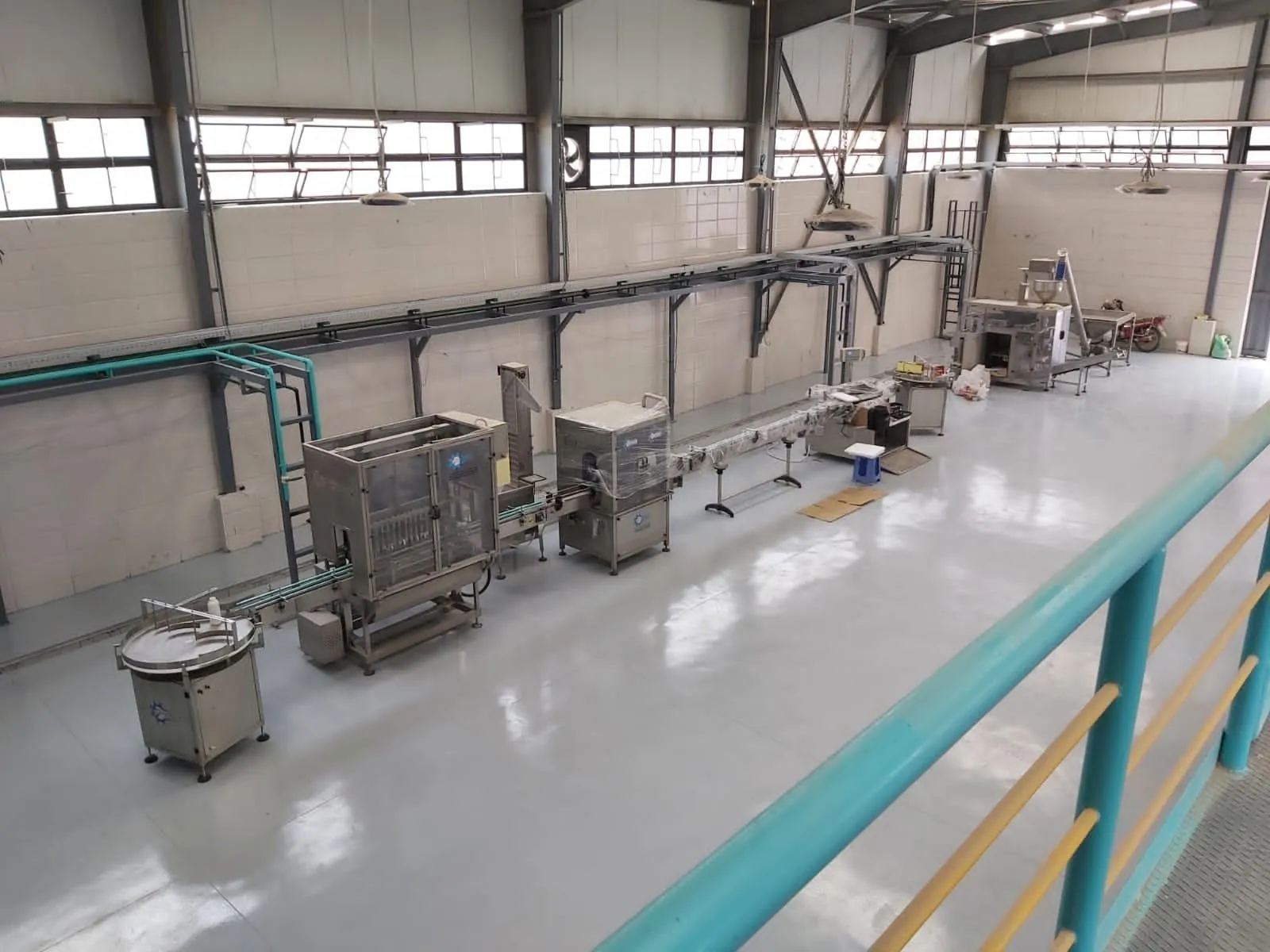
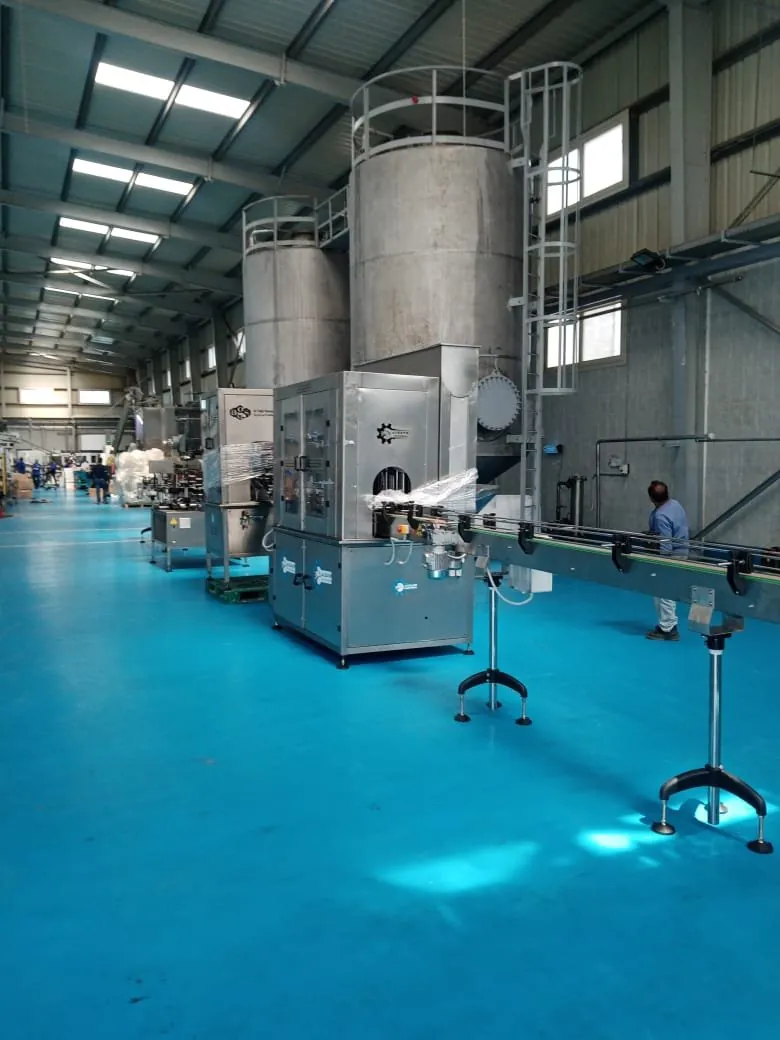
The line has four stages from one supplier. An anti-corrosion liquid filler doses the product and a rotary capping station closes each container. Buffer accumulation conveyors decouple the machines from each other, and an end-of-line palletizing cell stacks the finished cases.
Filling corrosive, foaming products
Detergents and industrial chemicals are corrosive and many grades foam, so the filler uses corrosion-proof dosing and anti-foam nozzles. The filler platform handles containers from 50 ml to 20 L with ±0.25% to ±0.5% accuracy, and its product-contact parts are AISI 316L, PTFE and Viton.
Capping and accumulation
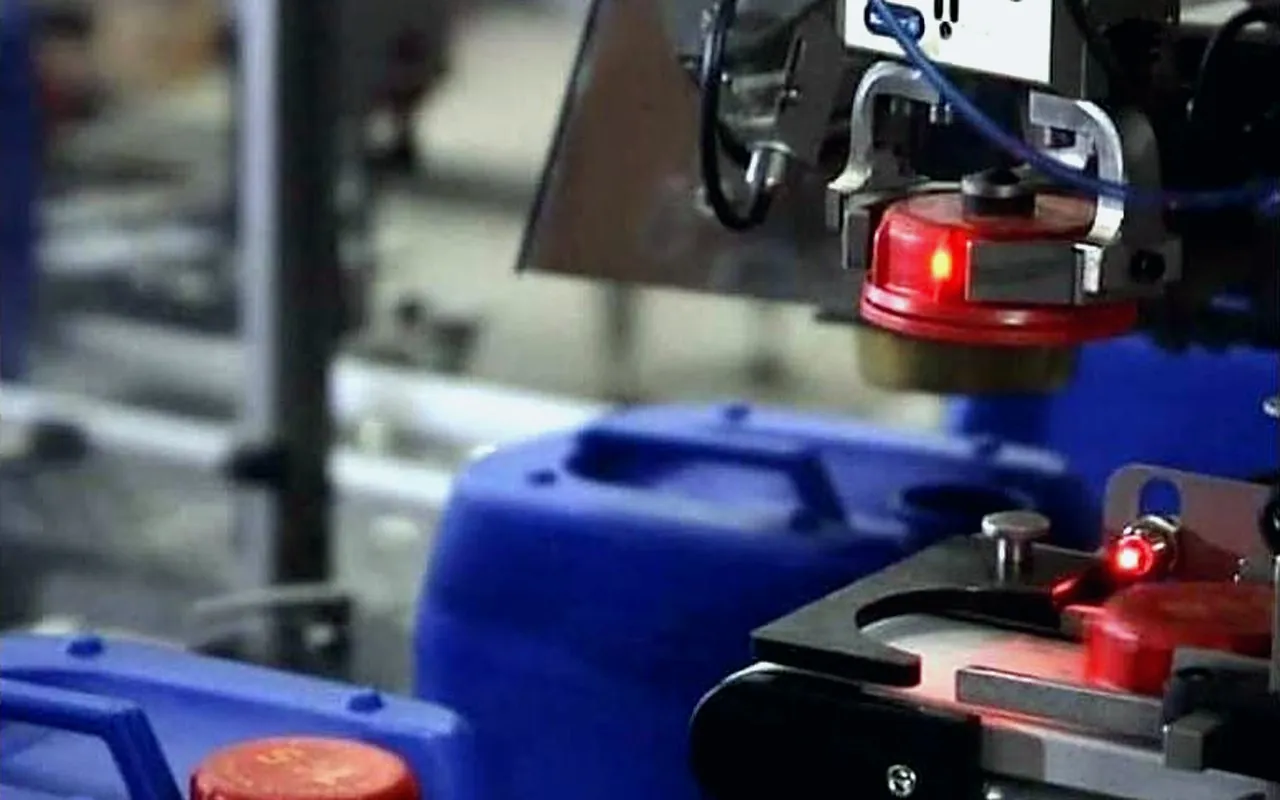
The rotary capper applies 0.5 to 8.0 N·m of torque through servo or magnetic clutch control. Between stations, buffer accumulation tables hold 1 to 15 minutes of production across 2 to 12 lanes. Zero-pressure optical sensors stop containers from pushing against each other while they wait.
End of line
The palletizing cell handles up to 12 cases per minute, with picks up to 50 kg and pallets up to 2,400 mm high. It works inside optoelectronic light curtains and interlocked fencing.
How the line was delivered
The project followed our standard delivery sequence. We started with a consultation and needs assessment, then produced the 3D layout and electrical engineering. The machines were fabricated in house and passed Factory Acceptance Testing with the customer's containers, and our crews then installed the line and ran Site Acceptance Testing at production speed.
Complete turnkey lines usually take 8 to 14 weeks from approved 3D layout to commissioning. They come with operator training and a 12-month mechanical and electrical warranty.